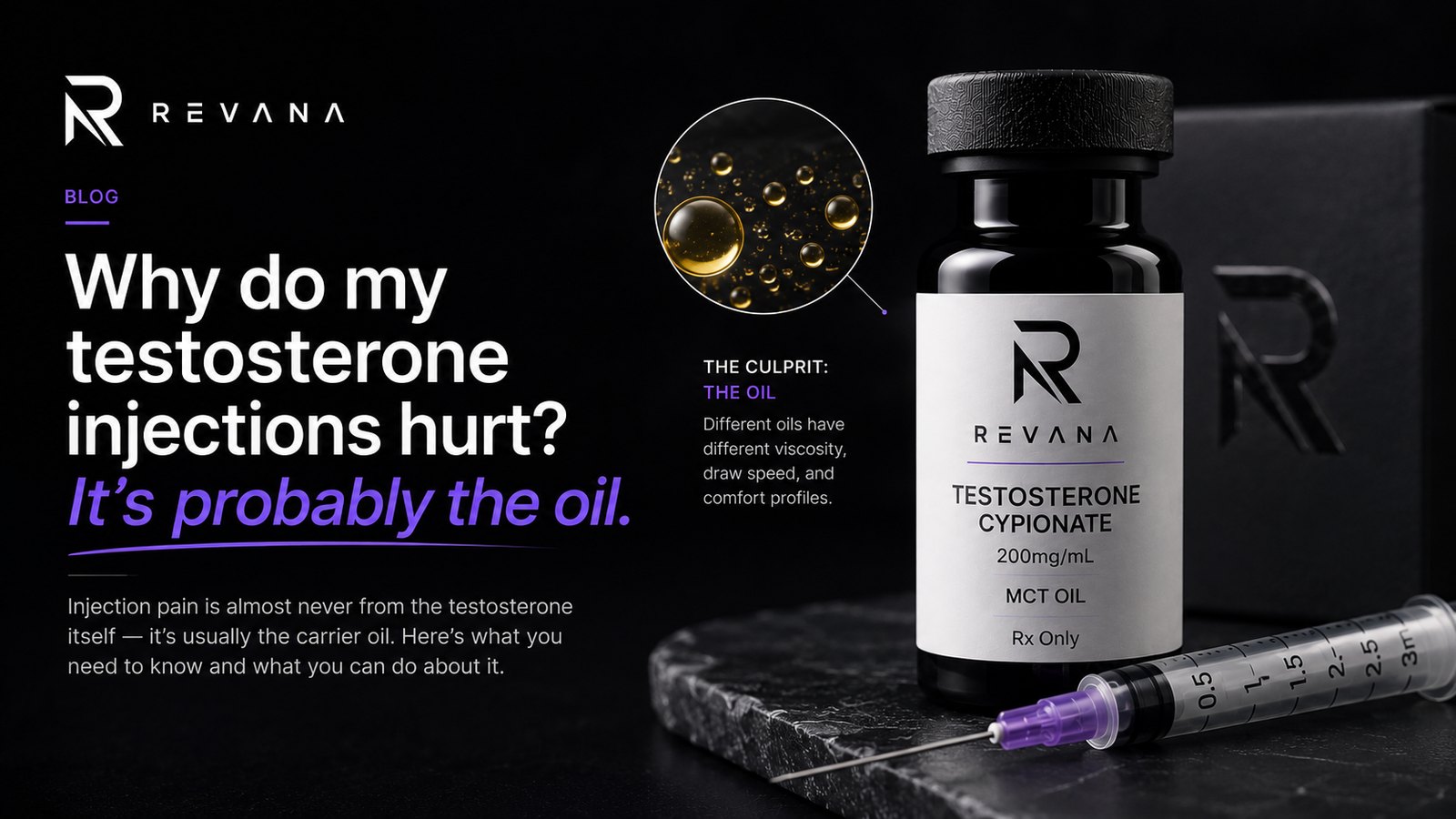
Injectable testosterone is always two things: the hormone and a carrier oil. Most clinics use thick seed oils because they are cheap. Soreness after injections, slow draws, and wide needles usually come from that oil, not from the testosterone and not from your technique.
One of the most common things we hear from men who transfer their TRT care to us is some version of this: I thought injection pain was just part of the deal.
It usually is not. And the reason is something most patients have never been told exists.
Your injection is mostly oil
Testosterone cypionate, the form most American men inject each week, is a crystalline compound. On its own, you cannot inject it. A pharmacy has to dissolve it in a carrier oil first. That oil is what actually fills the syringe. The hormone is dissolved inside it, in a small amount.
This matters because nearly everything you physically experience during an injection comes from the oil. How hard it is to draw. What size needle it needs. How it feels going in. How the site feels tomorrow. Those are properties of the carrier, not the medication.
The most common carriers are cottonseed oil and grapeseed oil. They are the industry standard for a simple reason: they are inexpensive. They are also thick. Thick enough that drawing a dose takes patience, and thick enough that many protocols use wider needles just to move the oil through.
What a thick carrier does to your week
- Wider needles. Thick oil flows poorly through fine needles. Clinics using seed oils often default to larger gauges. A larger needle disrupts more tissue, and you feel it.
- Slow, grinding draws. Viscous oil resists the plunger, both drawing up and injecting. That means more time with a needle in the muscle.
- Next-day soreness. Many men on seed-oil preparations report soreness that lasts a day or more after each injection. Everyone is different, but carrier thickness is one of the few variables in that equation you can actually change.
None of this is exotic. It is the same physics as pouring honey versus pouring water. The problem is that most patients never learn there is a carrier at all, so they never think to ask what is in theirs.
MCT oil is the thinner option
MCT stands for medium-chain triglyceride. It is an oil refined from coconut sources, and it is noticeably thinner than cottonseed or grapeseed oil. A compounding pharmacy can prepare testosterone cypionate in MCT oil under an individual prescription. Same medication. Different vehicle.
The difference shows up where you would expect. MCT preparations draw faster and pass through finer needles, and many of our patients describe the weekly experience as a night-and-day improvement. Over a therapy measured in years, at fifty or more injections per year, that is not a small thing. Comfort drives consistency, and consistency is what makes any long-term therapy work.
We should also be clear about what we are not claiming. The carrier does not make testosterone work better. Claims about better absorption or better results from one oil versus another are not well established, and you should be skeptical of anyone selling them. The honest case for MCT is comfort and practicality. If you are the one holding the syringe every week, that is reason enough.
Why most clinics never mention it
Cost and habit. Seed-oil testosterone is the commodity default. Offering MCT requires a compounding pharmacy relationship and a clinic that treats your weekly injection experience as part of your care. Most high-volume TRT operations compete on price, and the carrier oil never shows up on a pricing page, so it never gets improved.
That suggests a useful test when you are comparing clinics, including your current one. Ask a single question: what oil is your testosterone suspended in? A clinic that has a ready answer has thought about your experience. A clinic that pauses has not.
Other causes of injection pain worth ruling out
The carrier is the biggest lever, but not the only one. Injecting oil straight from the refrigerator, injecting too fast, reusing dulled needles, using the same site too often, and tensing the muscle during the injection all add discomfort. Simple fixes help with all of these.
One important exception: soreness that comes with spreading redness, warmth, swelling, or fever is not routine. That needs a prompt conversation with your physician.
Already on TRT and tired of the soreness?
Revana compounds the same testosterone cypionate in MCT oil. Finer needles, smoother draws, week after week. Switching starts with a fresh 42-marker panel and a physician consult for $119.
See How Switching Works →Injection comfort is not vanity. Adherence is the foundation of any therapy that runs for years, and a protocol you do not dread is a protocol you will actually stay on.