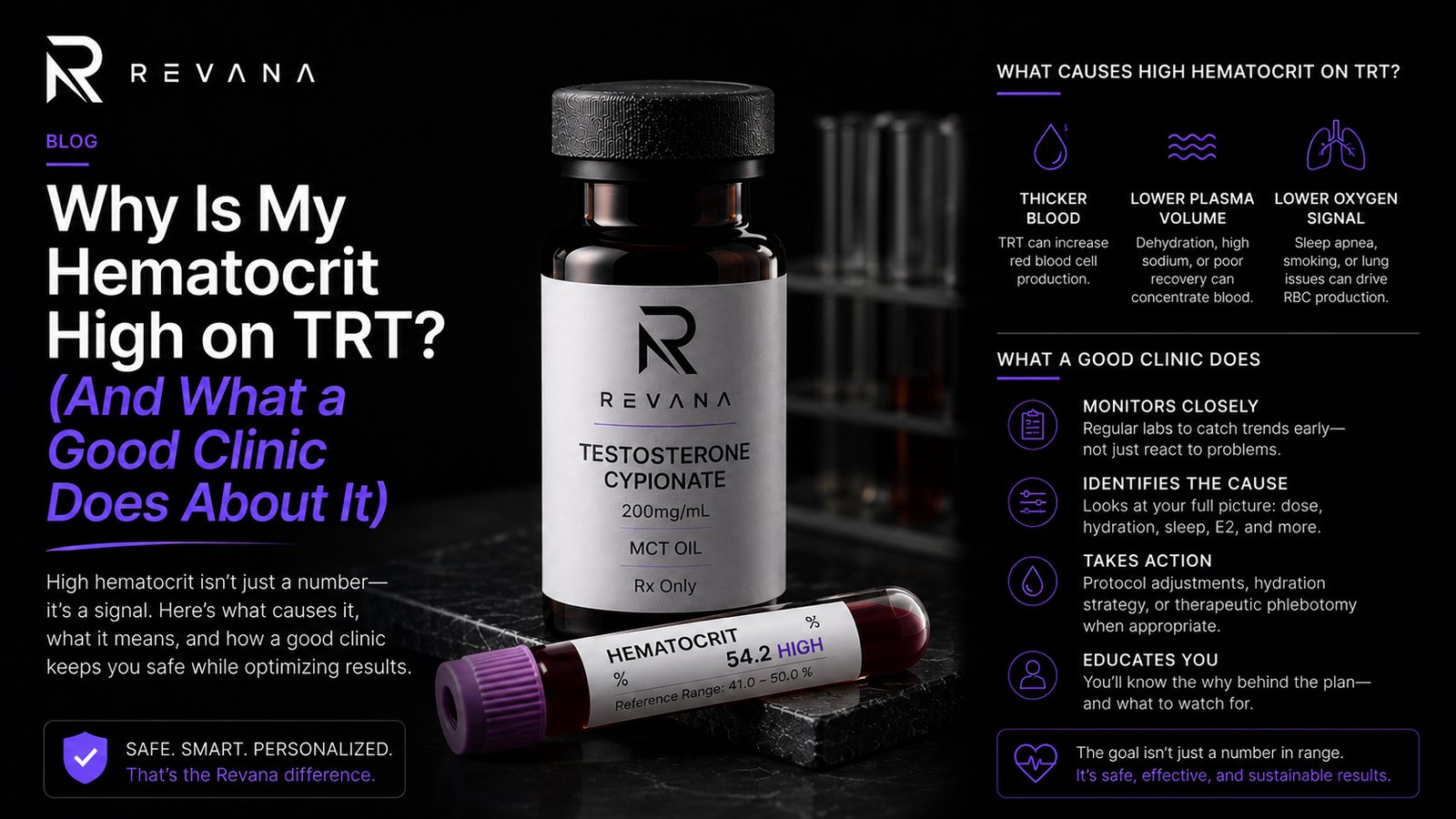
Testosterone stimulates red blood cell production, so hematocrit commonly rises on TRT. That is a known, manageable effect, but only if someone is actually watching it. If your level came back high, the answer is a physician conversation about your specific numbers, not panic, and not quietly ignoring it. If your clinic has never rechecked it, that is the bigger finding.
You got a lab report back and hematocrit is flagged high. If you are on testosterone therapy, here is the context nobody gave you with the result.
What hematocrit is
Hematocrit is the percentage of your blood that is red blood cells. Those cells carry oxygen, so you need plenty of them. But blood is a fluid, and as the percentage climbs, blood gets thicker. Thicker blood moves less easily, and at high levels that is a genuine cardiovascular concern. This is why hematocrit sits inside the complete blood count on any serious panel.
Why TRT raises it
Testosterone signals the body to make more red blood cells. That is not a malfunction. It is one of the hormone's normal jobs, and it is part of why men have higher hematocrit than women in the first place. On therapy, that signal gets stronger, and some men respond more than others. A rise on TRT is common enough that checking hematocrit before treatment and rechecking it on a schedule is simply what responsible prescribing looks like.
A few things can push it further. Dehydration concentrates the blood and can exaggerate a reading. Sleep apnea, especially untreated, raises it independently, which is one reason it appears on screening questionnaires. Smoking does too.
What a good clinic does about it
This is where clinics separate. A physician managing this properly starts by confirming the number, because a single reading taken while dehydrated is not a trend. From there, the options they weigh are well established: adjusting the dose or the injection schedule, addressing contributors like sleep apnea, and in some cases therapeutic phlebotomy, which is a supervised blood draw that brings the level down. Which move fits you depends on your actual values, your history, and your response. That is a decision made with your physician, not from an article, and not from a forum.
What it is never supposed to be: a value nobody looks at. Hematocrit management is not an exotic add-on. It is table stakes for prescribing testosterone.
The question that matters more than the number
If you have been on TRT for a year or more, pull up your records and answer one question: when was your hematocrit last checked?
If the answer is at baseline, or never, your flagged lab is not the main problem. Your monitoring is. Plenty of high-volume TRT operations test one hormone value at signup and nothing on a schedule afterward, which means the most predictable side effect of the therapy they sell is the one they are not watching. You should not have to discover a rising hematocrit by accident at a physical.
Questions worth bringing to your physician
- What is my actual value and trend, not just the flag?
- Was I well hydrated at the draw, and is a repeat worth doing?
- Could sleep apnea or smoking be contributing in my case?
- What monitoring schedule are we on going forward, and which values does it include?
When was your hematocrit last checked?
Revana's 42-marker panel includes a complete blood count with hematocrit, read by a board-certified physician. It costs $119, whether you become a patient or not.
Check My Levels →A high hematocrit on TRT is a known passenger, not a mystery. It just needs someone in the driver's seat. If your current clinic is not watching it, find one that considers that part of the job.